

Smart City Expo World Congress:
Bridging the Gap Between
Science and the City
Smart City Expo World Congress transforms scientific knowledge into urban action. We provide researchers and academics a premier global stage to validate their work, influence policy, and forge partnerships with industry and city leaders.
Bringing Research to the Heart of Urban Decision-Making
Cities are living laboratories. The decisions made today about mobility, energy, housing, and digital infrastructure will shape urban life for decades to come. Yet the complexity of these challenges demands more than good intentions or available technology: it demands rigorous, evidence-based knowledge.
State-of-the-art research coming from universities and research centers is not an academic exercise; it is the foundation upon which smarter cities are built. And increasingly, public decision-makers know it.
The demand for science-backed solutions has never been greater among city leaders navigating climate pressure, demographic change, and the rapid evolution of AI.

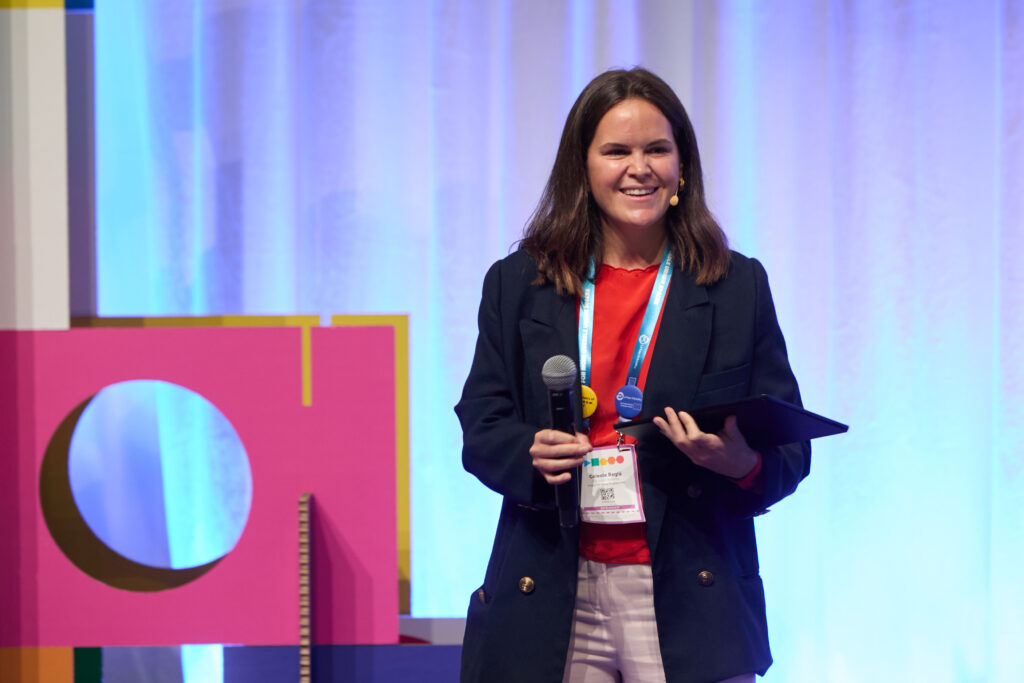
From Academic Insight to Citywide Action
For academic institutions working at the frontier of innovation, SCEWC offers an environment no campus seminar can replicate: direct access to the decision-makers who turn research into policy, infrastructure, and lived urban experience.
With over 1,000 cities and 1,100+ exhibitors converging in Barcelona each year, this is where research institutions connect with city leaders, technology companies, and institutional partners seeking scientific credibility and evidence‑based solutions.
Taking research to the global urban stage
The distance between academic discovery and urban implementation has never been shorter — or more full of possibility.
As AI, data governance, mobility, and climate resilience rewrite the rules of city management, researchers who position themselves at the intersection of knowledge and action will help shape the next generation of cities.
At SCEWC, we offer multiple pathways for academic engagement — from our Call for Research Papers and Hackathon to dedicated exhibition space — ensuring that high‑level research doesn’t stay in a journal but becomes part of tomorrow’s urban solutions.
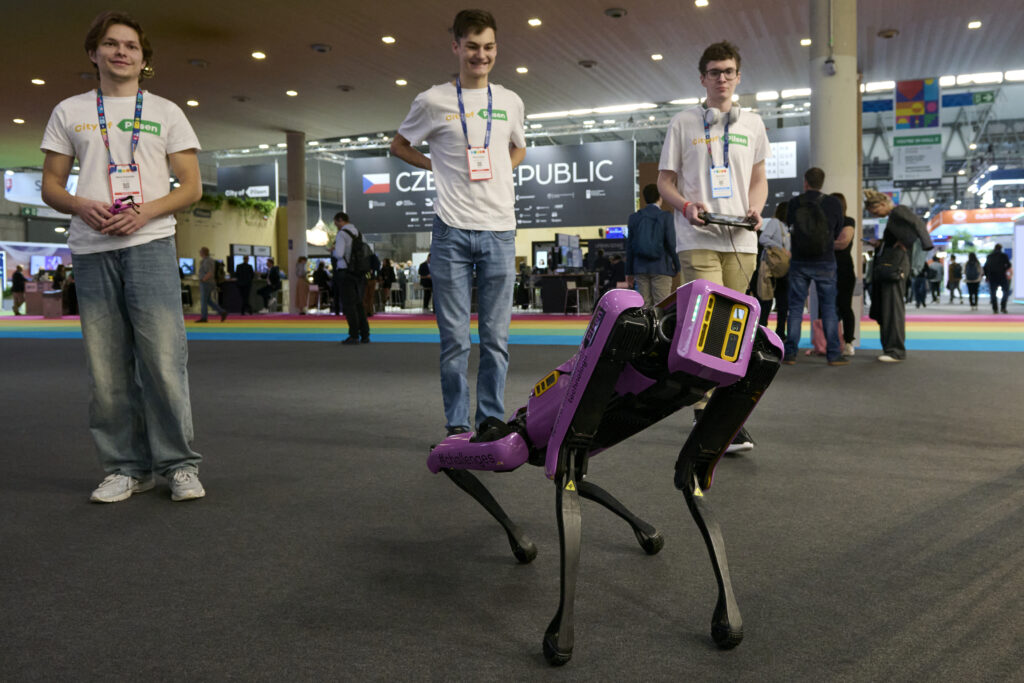
Exclusive benefits por selected papers
- Publication in an indexed scientific journal (Scopus Q2) at a reduced cost, available in both English and Spanish.
- Dedicated presentation session during the event to showcase research results, including a featured spot in the official program and a fully equipped space (table, chairs, and totem).
- Three passes providing full access to the event (valued at €1,250 each), excluding travel and accommodation expenses.
- International visibility and networking opportunities, providing access to the Speakers Room for private meetings with key contacts.
UPCOMING DEADLINES
13 SEPT 2026
Deadline for Article / Chapter submission
1 OCT 2026
Acceptance letter from the journal
15 OCT 2026
Payment of the Article Processing Charge fee
3-5 NOV 2026
Celebration of the Smart City Expo World Congress
DECEMBER 2026
Monographic publication
Find out which research papers have been selected in 2025
18 proposals from 7 countries on AI applied to cities, covering a wide range of topics: safety, urban planning, mobility, citizen services, environmental IoT and Digital Twin utilities, AR/VR, generative and immersive AI, social services and participation, tourism, and AI models.
- The Caatinga as a Living Lab: Climate, Resilience and Smart Cities: Lessons from Brazil’s Semi-Arid Region for Global Urban Futures
- Preplanned City: BGI in Songdo: A Comparative Analysis with New York, Singapore and Vienna
- Surplus: Strategic Urban Resource Planning Using Ldts and Unified Kqr Sustainability Metrics: A Methodology to Align Local Digital Twins with Measurable Outcomes
- Atenea Artificial Intelligence for Elderly People: No More Buttons, Menus or Tactile Screens. With Atenea, by a Voice Conversation, Everything Is Possible
- AI Cities Strategy Conceptual Model: Application to Four Cities: New York, Buenos Aires, Barcelona and Madrid.
- Slms for Natural Language Database Interaction with the SENSE Citiverse of Cartagena City
- Modeling and Analytics Tools for Electric Mobility: Use-Cases at the Urban Level
- Enhancing the Reliability of Lorawan: Din Flood Alarm System
- Object Recognition and Conversational AI in Real-World Contexts: Enhancing Museum Experiences Through Interactive Systems
- Negevpulse: Crowdsourced Digital Mapping for Visibility in Unrecognized Bedouin Villages
- Nextgenguides: AI-Enhanced Multimedia Navigation and Content Creation for Cultural Heritage
- Citizen-Centered Generative AI For Urban Transformation: The AI Copacabana Demo Case
- AI-Based Prediction Models for Urban Parking Availability: A Case Study of Valencia
- Barriers to the Effective Implementation of AI in Predicting Public Works
- Spatial Pedestrian Safety in Riyadh School Zones: A Data-Driven Approach: Evaluating Spatial Pedestrian Safety in Riyadh’s School Zones Using Multiple Linear Regression and Machine Learning: A Data-Driven Approach
- Bike-Sharing Demand Forecasting Using Machine Learning: The Use Case of Valladolid, Spain
- Augmented Reality Reconstruction of Deteriorated Art
- An Insight into Traffic Analysis with Computer Vision: Leveraging Smart Infrastructure for Urban Traffic Flow Analysis
TO TAKE INTO ACCOUNT
- All papers will undergo a double-blind peer review following standard scientific publishing protocols.
- A maximum of 20 top articles/chapters will be selected for publication.
- Up to 4 authors per chapter. Authors may not be repeated across submissions. Maximum of 2 articles per entity, in accordance with SCOPUS rules.
- A Letter of Accepted Publication will be issued by the journal by 1 October 2025.
- Accepted articles are subject to an Article Processing Charge (APC) of €907,50 — Smart City Expo covers 50% of the regular fee.
IN COLLABORATION WITH
IN COLLABORATION WITH:
SEE ALSO

Tell us what interests you and get the latest news

Tell us what interests you and get the latest news


