Cutting-edge AI research for cities
CALL FOR RESEARCH PAPERS
Submissions are now closed. Thank you to all researchers and contributors for sharing their insights on how AI can improve efficiency, strengthen resilience, and enhance quality of life.
Accelerating Urban Innovation Through AI Research
Submit your proposal by 13 September 2026
As applied AI and other emerging technologies evolve rapidly, cities must embrace the latest innovations to improve services and attract talent and investment. Besides, given the complexity of public procurement, they can’t afford to wait for solutions to reach the market.
After a successful first edition —with 18 proposals from 7 countries— Smart City Expo World Congress is launching a new Call for Research Papers to continue bridging state-of-the-art AI research with the smart city ecosystem.
A maximum of 25 papers (2 per entity, up to 4 authors per article) will be published in a special issue of a scientific journal and featured at Smart City Expo 2026 in a dedicated session within the official program.
Selection criteria: papers describing research about CITIES, AI (of any kind), Min TRL5 (min a proof of concept done). Excluded any commercial product as main topic.
Share your scientific contribution on how AI can transform efficiency, resilience, and quality of life, and place your work at the heart of the world’s leading event on urban innovation.

Find out which research papers have been selected in 2026
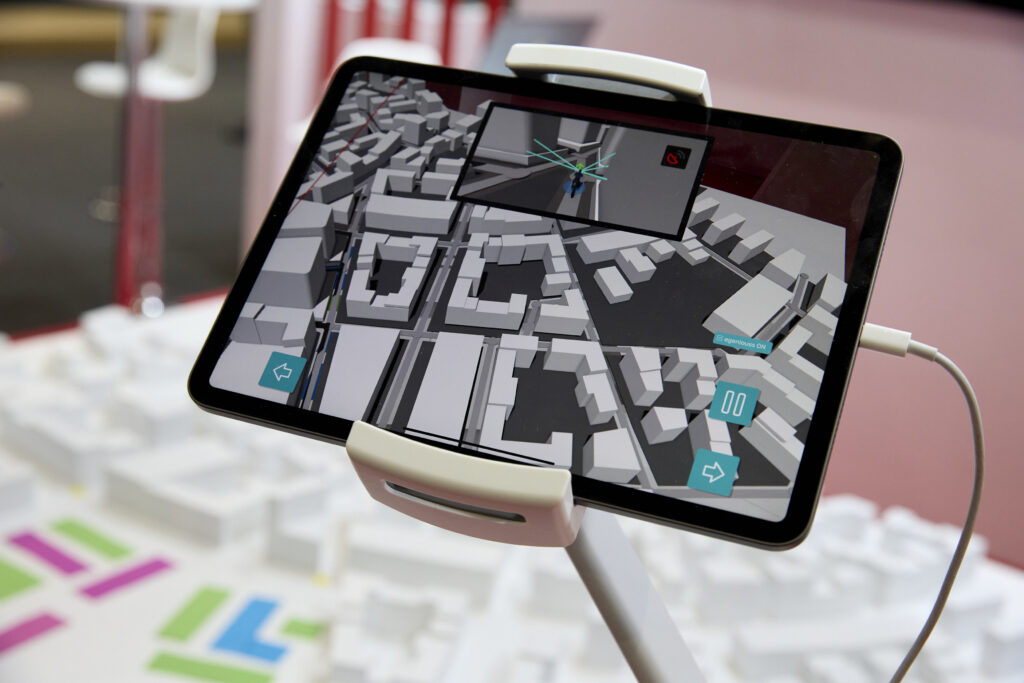
25 proposals from 13 countries on AI applied to cities, covering a wide range of topics: safety, urban planning, mobility, citizen services, environmental IoT and Digital Twin utilities, AR/VR, generative and immersive AI, social services and participation, tourism, and AI models.
- A Bio-Cultural Biomimetic Framework for Climate-Responsive Building Envelopes in Hot and Arid Environments: Integrating Biological Mechanisms and Saoura Vernacular Knowledge (Argelia)
- A Multi-Criteria, Risk-Informed Asset Integrity Framework for Power System Protection & Control Equipment: Bridging Reliability, Cybersecurity, Human Factors, and Lifecycle Economics (USA)
- A Municipal Digital Twin Simulator for Drone-Assisted Emergency Access in Rural Territories (Spain)
- AI-Enabled Remote Sensing for Smart Cities Covering from Hyperlocal to the Hypersky (Spain)
- Auditable Closed-Loop AI Agents for Urban Bridge Digital Twins (Japan)
- Augmenting Smart City Management through the Integration of Digital Twins with Fog Computing (Saudi Arabia)
- Challenges for Autonomous Mobility in Policing: Research from Dubai Police (United Arab Emirates)
- Citiverse: AI Sparrow as a Multispecies Participation Agent for Inclusive Urban Futures (Finland)
- Context-Aware Footfall Intelligence for Historic Districts Via Digital Twins: Per-Sensor Machine Learning and Spatio-Temporal Graph Networks in the Regen Project (Spain)
- Governing Agentic AI in Cities: Provenance-Enforced Decision Support for Water Infrastructure (South Korea)
- Indirect Prompt Injection in Municipal Document-Processing Copilots: Attacks, Defences and Harm: A representative proof-of-concept evaluation across four large language models (Spain)
- Infrastructure Project Delivery in Riyadh's Road Network (Saudi Arabia)
- Machine Learning for Urban Heating Vector Estimation to Support City Decarbonization: Relevant features, transferability, and the role of spatial patterns (Spain)
- Moving toward Robot friendly Cities (South Korea)
- POLICING 5.0.: The Next Era of Urban Policing (United Arab Emirates)
- Preplanned City: Biophilic Infrastructure in SmartCities (USA)
- Schema for AI Driven Municipality: Why a Simple Chatbot is not Enough (Czech Republic)
- SYNAPCITY-DT: AI-Driven Urban Energy Intelligence for Smart Cities (Finland)
- Vision without surveillance: Using Zero-Shot CLIP for scalable built environment feature extraction (USA)
- FROM DATA TO ACTION: GENERATIVE AI FOR TACKLING VIOLENCE AGAINST WOMEN (Brazil)
- Methodology-Governed AI for Regenerative Urban Planning: From Single-Pass to Role-Decomposed SCM Execution in De Marken, Almere (The Netherlands)
- SCALABLE AND DATA-SOVEREIGN MUNICIPAL AI INFRASTRUCTURE: THE CITY OF PORTO CASE STUDY (Portugal)
- EVALUATING GENERATIVE AI MODELS FOR HISTORIC URBAN HERITAGE VISUALIZATION IN SMART CITIES (Saudi Arabia)
- AI-Enabled Systemic Strategies for Smart Net-Zero City Development (United Kingdom)
- Integrating Remote Sensing, Multi-Objective Optimization, and Agent-Based Modelling for Nature-Based Flood Mitigation (Spain)
Exclusive benefits por selected papers
- Publication in an indexed scientific journal (Scopus Q1/Q2) at a reduced cost, available in both English and Spanish.
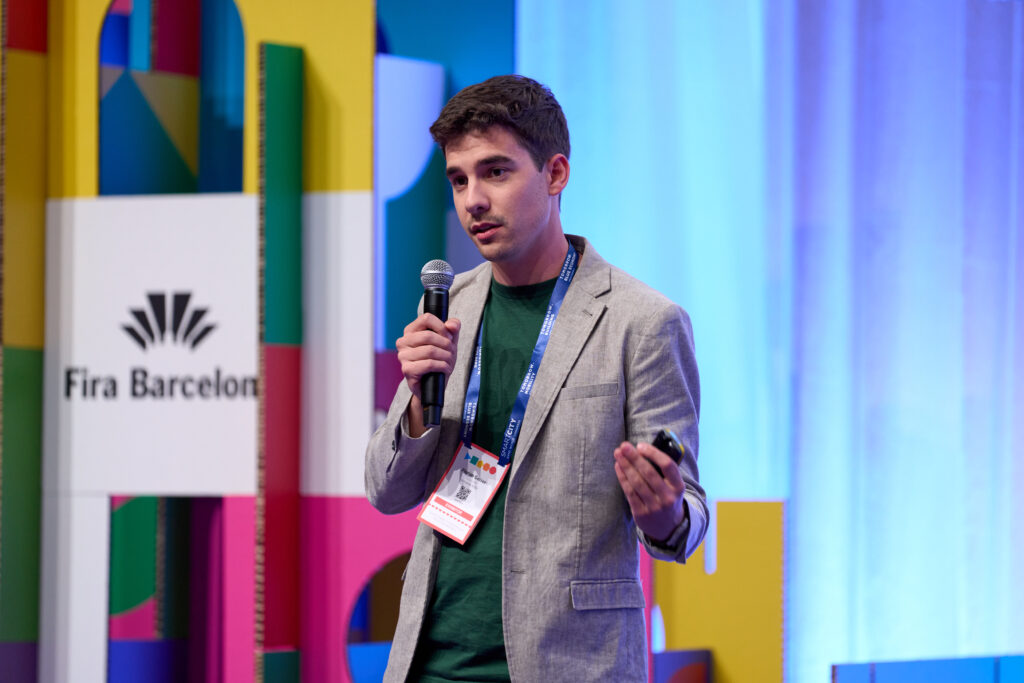
- Dedicated presentation session during the event to showcase research results, including a featured spot in the official program and a fully equipped space (table, chairs, and totem).
- Three passes providing full access to the event (valued at €1,250 each), excluding travel and accommodation expenses.
- International visibility and networking opportunities, providing access to the Speakers Room for private meetings with key contacts.
TO TAKE INTO ACCOUNT
– Submission and Publication Policy – Smart City Expo Special Issue
All manuscripts submitted in the context of the Smart City Expo Special Issue will be treated as regular submissions to the journal and must comply fully with the journal’s editorial and ethical standards.
Conference participation or presentation does not imply acceptance for publication.
All submissions will undergo:
- Initial editorial screening.
- Assignment to an editor (Editor-in-Chief or designated handling editor).
- Double-blind peer review by at least two independent reviewers.
Reviewers are selected and approved by the journal’s editorial team. Editorial decisions are made exclusively by the journal’s editors and are based solely on academic merit.
Only manuscripts that successfully pass the full peer review process will be considered for publication.
– Selection of contributions
The number of articles included in the Special Issue will be determined based on:
- The outcome of the peer review process.
- The scientific quality of submissions.
- And the editorial standards of the journal.
There is no automatic quota or guaranteed publication linked to conference participation.
– APC and funding
Accepted articles are subject to the journal’s standard Article Processing Charge (APC) of €907.50.
In the context of this collaboration, Smart City Expo will cover half of the cost for participating authors. This support:
- Does not influence editorial decisions.
- Is applied only after acceptance.
- And has no impact on the peer review process.
– Submission process
All manuscripts must be submitted through the journal’s official platform.
Authors must:
- Register or log in.
- Complete all required metadata.
- And indicate the corresponding Special Issue in the submission system.
UPCOMING DEADLINES
13 SEPT 2026
Deadline for Article / Chapter submission
1 OCT 2026
Acceptance letter from the journal
15 OCT 2026
Payment of the Article Processing Charge fee
3-5 NOV 2026
Celebration of the Smart City Expo World Congress
DECEMBER 2026
Monographic publication
IN COLLABORATION WITH: